Burma Food Coma!

Whenever I travel, food is something I seldom focus on, much less make it the main theme of a blog entry about my latest trip. I’ll try anything once but I must confess I’m not very adventurous when it comes to food.

So I was pleasantly surprised at myself for gamely trying everything that was set down in front of me on my recent trip to Myanmar. I’ve done a fair amount of travelling around the SE Asian region. And being Filipino, my palate is not as sophisticated nor seasoned for chili like our spicier neighbours from Thailand, Singapore or Indonesia. To me, chili is chili. It makes everything taste the same.

Which is why I found Myanmar cuisine so much more agreeable to my relatively simpler palate as they have a lot of the same sour, savoury and salty (oh my, the saltiness!) tastes that characterise Filipino dishes as well. Myanmar cuisine isn’t as spicy as most of the food in the region. It’s has some similarities to Vietnamese with all their fresh spring rolls and vegetable pho soups, and Cambodian, with all the pineapple fried rice that also reminded me of amok. But to my mind (and tongue) Burmese had richer and more flavourful textures than these other two countries (which may be attributed to the liberal use of peanuts, crunchy veggies and deep fried garlic…).

Following is my blow-by-blow rundown of 6 days of food tripping in the ‘Land of the Golden Pagodas’…

12 Hours from Yangon to Nyaung Shwe… by overnight bus!
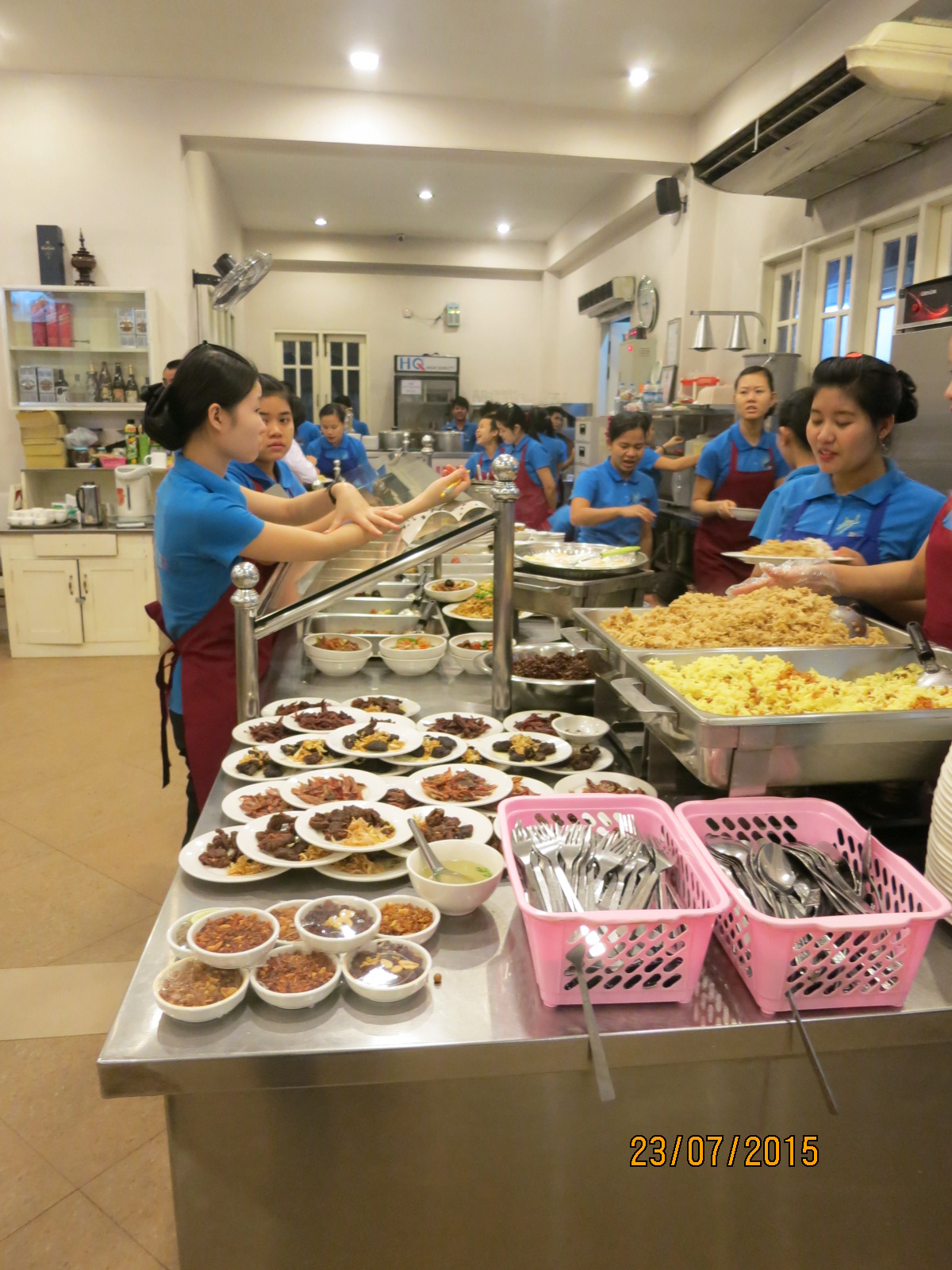
Local bus stop on the Yangon-NayPyiTaw highway

My first encounter with genuine local food was on the bus ride from the capital to the tourist town of Nyaung Shwe in the Shan State. We departed from Aung Mingalar Bus Station outside Yangon 7 minutes shy of the printed 6 PM departure time, and after about three hours of uneventful driving down the surprisingly deserted national highway, pulled into a local rest stop for dinner. The complex was made up different diners and I simply chose the one that was most buzzing with activity.

The cafeteria set-up made it easy enough to order food even though the staff barely spoke English. The lady who took my order did know how to say, “pork”, or “beef” whenever I pointed at a dish. And I managed to order rice (of course!). I thought I was getting a simple chicken dish with rice and one veggie.

Dinner set meal of chicken curry, rice, pickled veggies, mango salad and fresh vegetable platter.

Turns out a standard Burmese meal always consisted of a main dish accompanied by various side dishes like bamboo shoot or tofu salad, soup and other sidings. I was floored when my simple chicken curry rice order arrived with a vegetable platter with peanut sauce dip that I wasn’t even sure I knew how to eat. After observing the other locals around me, I decided to plunge in and followed their actions of wrapping the smaller vegetables within the larger lettuce leaf and dipping it into the peanut sauce. Definitely saw why one needed peanut sauce to add flavour to an otherwise ‘leafy’ tasting dish.
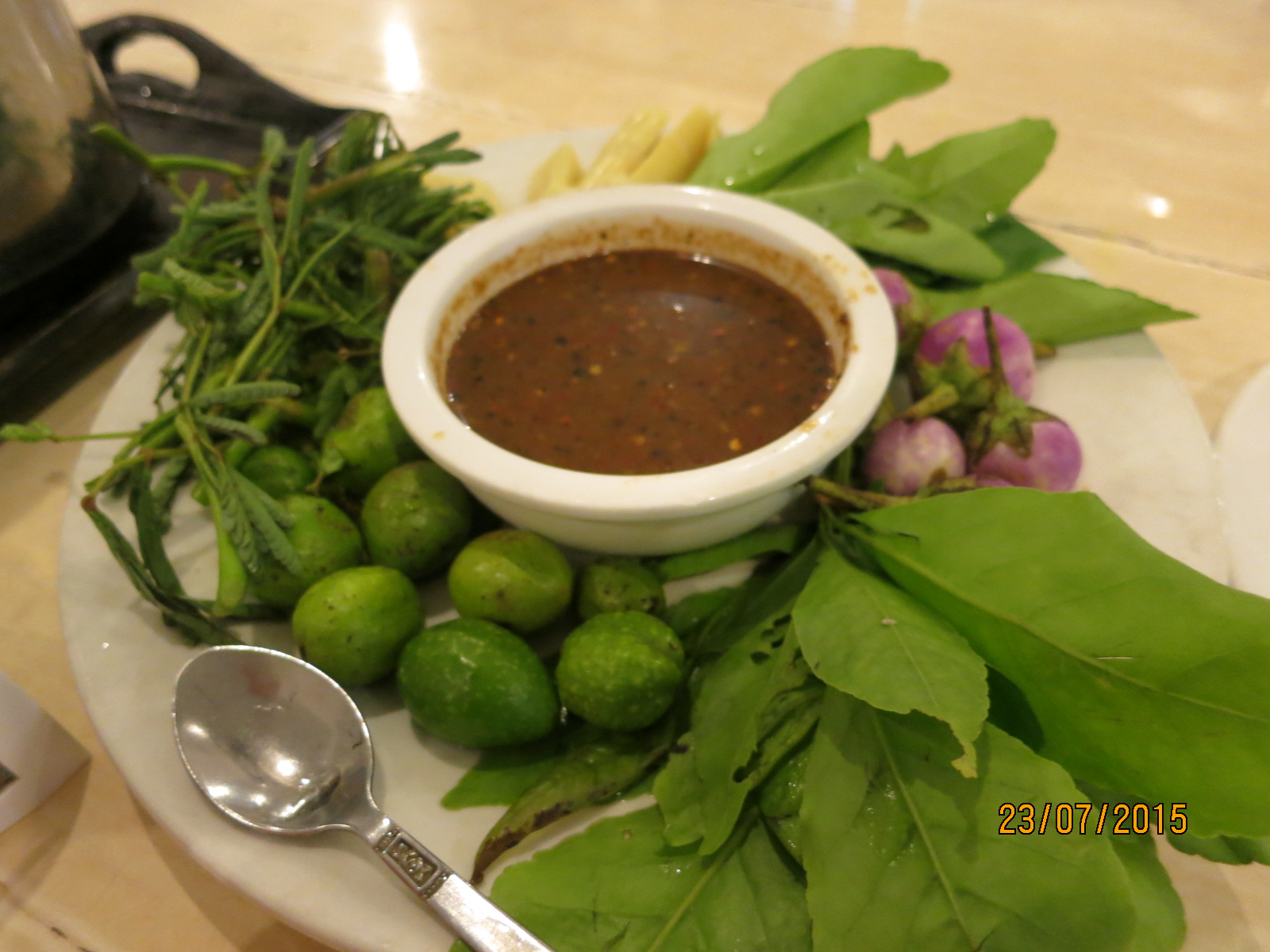
My first encounter with Burmese veggie platter with various leaves, beans, berries and peanut sauce.

Total dinner bill with one soda can I got from the fridge? Roughly S$2.50.

The Best Pineapple Rice – ever!

The next morning, our bus arrived at the small, quaint town of Nyaung Shwe at around 5:30 AM and after a 5-minute tuk-tuk ride to my hotel at the relatively ‘swanky’ Grand Nyaung Shwe Hotel, I found myself taking what turned out to be an hour-long walk around my neighbourhood. My dawn arrival allowed me to witness the town slowly coming to life: shops setting out fresh produce in newspaper-lined wooden crates, residents sweeping dusty driveways and boatmen flocking to the tourist information office to grab their share of business for the day.

The surrounding countryside where I discovered we had driven over those mountains the previous night.

I couldn’t stop myself from taking a nap after a fitful sleep in the coach the night before. So after my walk, I retired to my hotel and slept till noon. I woke up famished and decided I was ready for more local food for lunch.

The best pineapple fried rice at View Point Lodge Restaurant
Fresh watermelon shake, together with my dish came to total of about S$7...
Fresh watermelon shake, together with my dish came to total of about S$7…

After navigating my rented bicycle down the town’s tiny and now very busy streets, I went for lunch at an obviously high-end tourist restaurant across the canal where –swear to God– I had the tastiest pineapple fried rice with pork dish I’d ever have in my life! Not sure what those black little ‘mustard-sized’ seeds were (nope, they weren’t pepper) but they certainly made the dish absolutely divine.
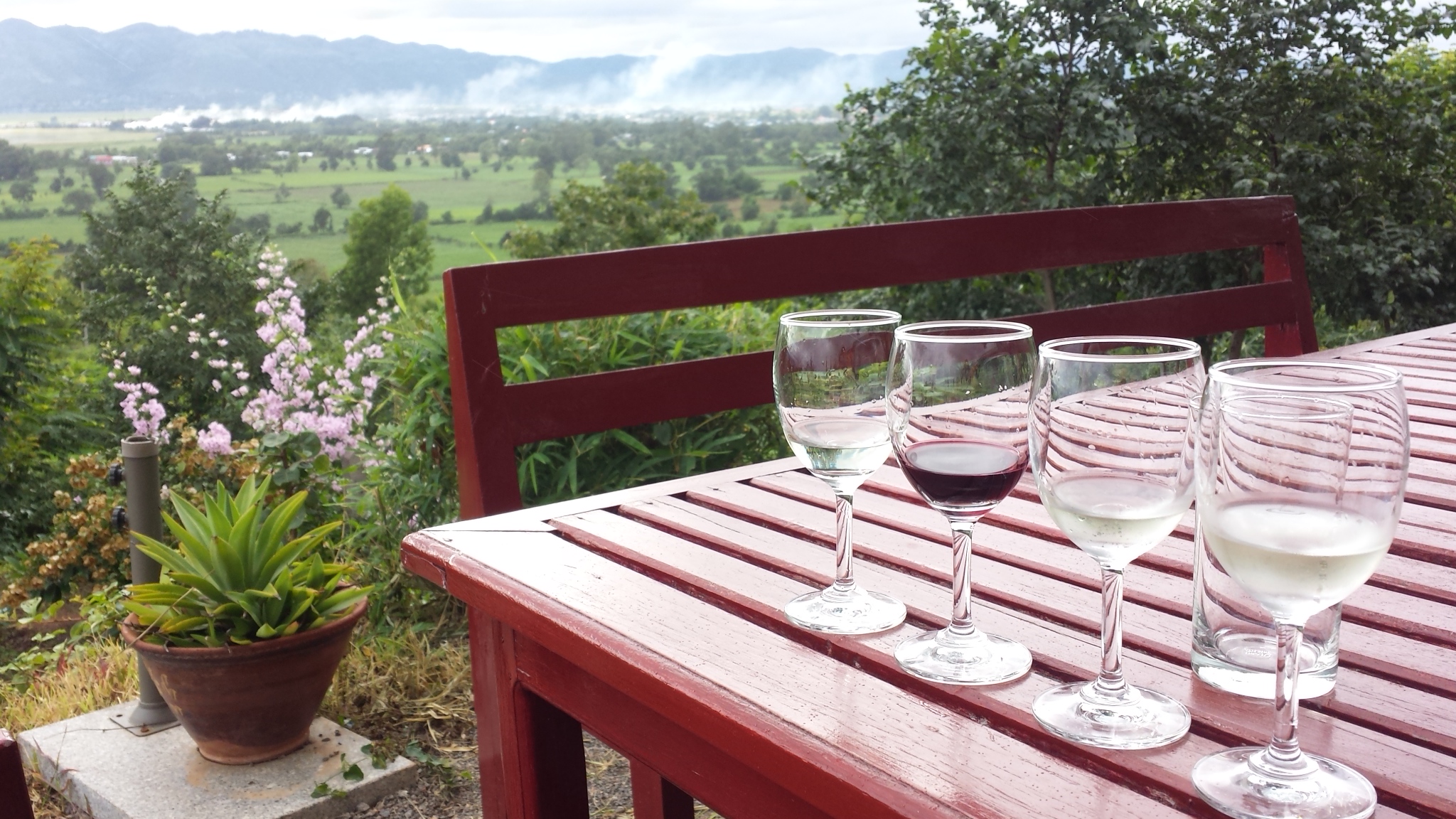
Wine tasting set at Red Mountain Estate

However, this was where I got a taste as well of how surprisingly expensive Myanmar can be. My meal for one came to a total of S$7 which is more or less what I pay for a typical hawker lunch back home. Later that afternoon, I rode up a small hill to what was touted as an unusually European wine vineyard for some wine-tasting. Red Mountain Estates had a pretty decent tasting menu at S$3.50 for a set of four variants. After which, guests could buy a glass of their selection for roughly S$4. Which I did, of course!

Local all the way in Nyaung Shwe

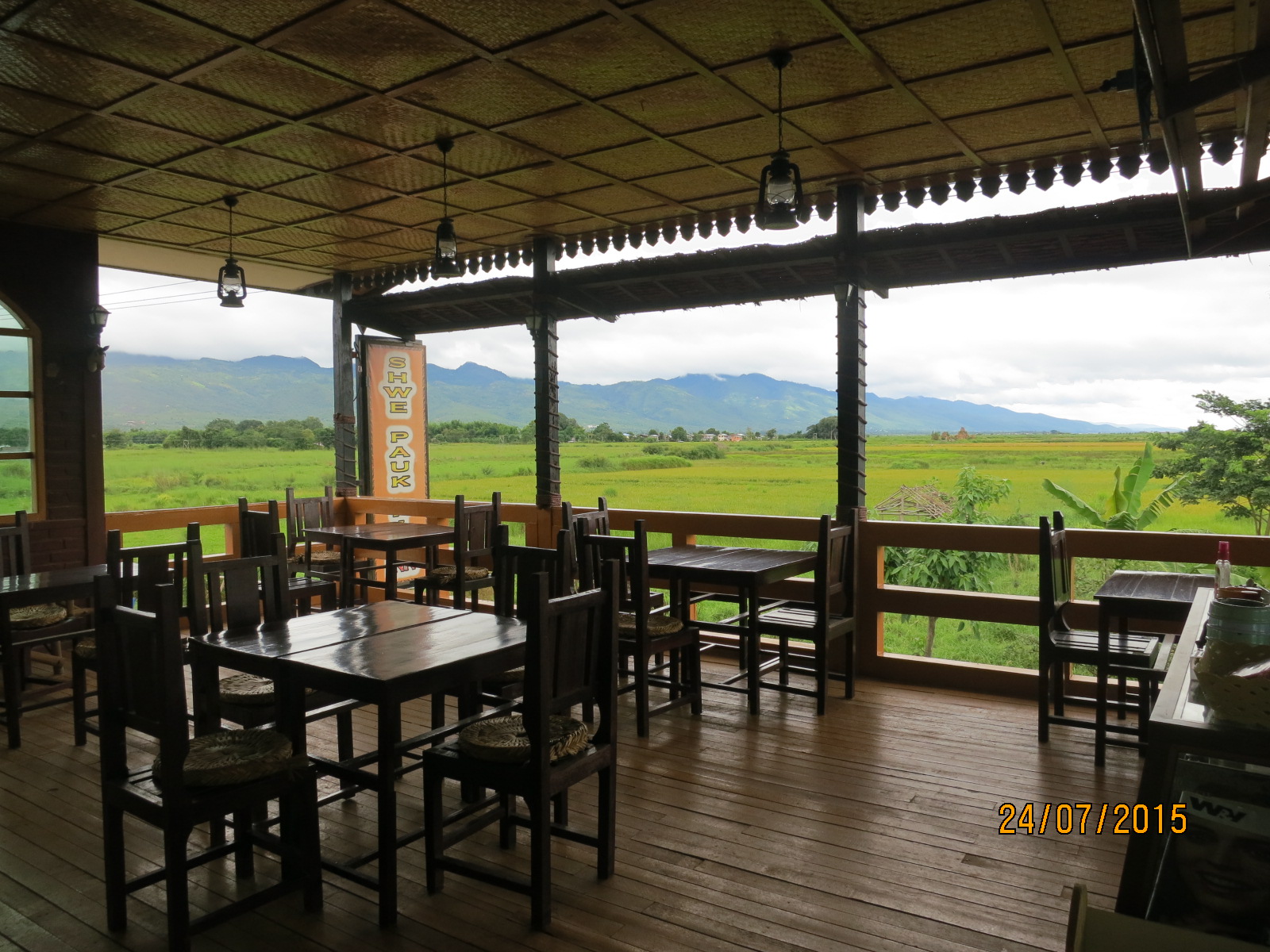
So I returned from the wine tasting at Red Mountain slightly buzzed and understandably so after also having taken a puff of the local cheeroot cigars a couple of American ladies had offered me. I was once again starving and decided to cycle back to a small hostel I had chanced upon earlier during my walk. It was located at the edge of the village with charming local decor and was completely deserted despite its multiple signs of ‘the best Shan noodles’. I took a chance anyway and climbed up to their second floor restaurant, snapping photos along the way as I found their many antique knick-knacks and somewhat nautically themed interior design appealing.
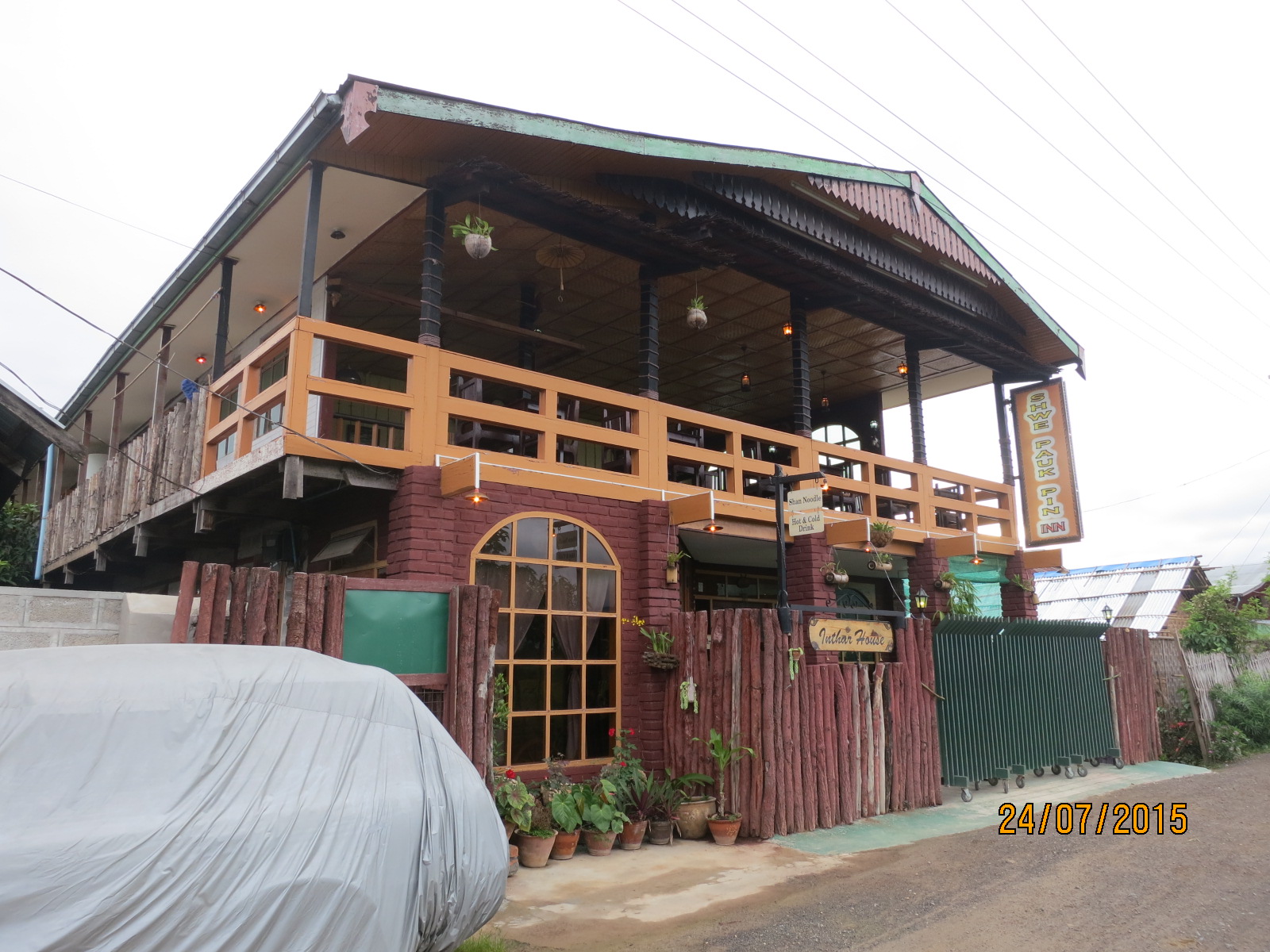
Charming little hostel and resto where I had my first taste of Shan noodles.
Shan noodles with pork ribs for 1500 kyat (roughly S$2).

The young Burmese couple who warmly welcomed me were extremely accommodating. Actually it was just the wife who chatted to me as her husband was having a drinking session in the lobby with a buddy. No matter. The hot Shan noodle broth flavoured by a thick slab of pork, spring onions, black pepper and some other spices and seasoning I couldn’t identify was the perfect feast after an afternoon of drinking. I was also given green tea (another staple of Burmese meals). I ended up relaxing in one of the bamboo lounge chairs that were lined up against the wall facing the balcony, and simply sat there enjoying the stillness and the silence, save for the orchestra of crickets and frogs that accompanied the evening sky’s transformation from deep blue to black.
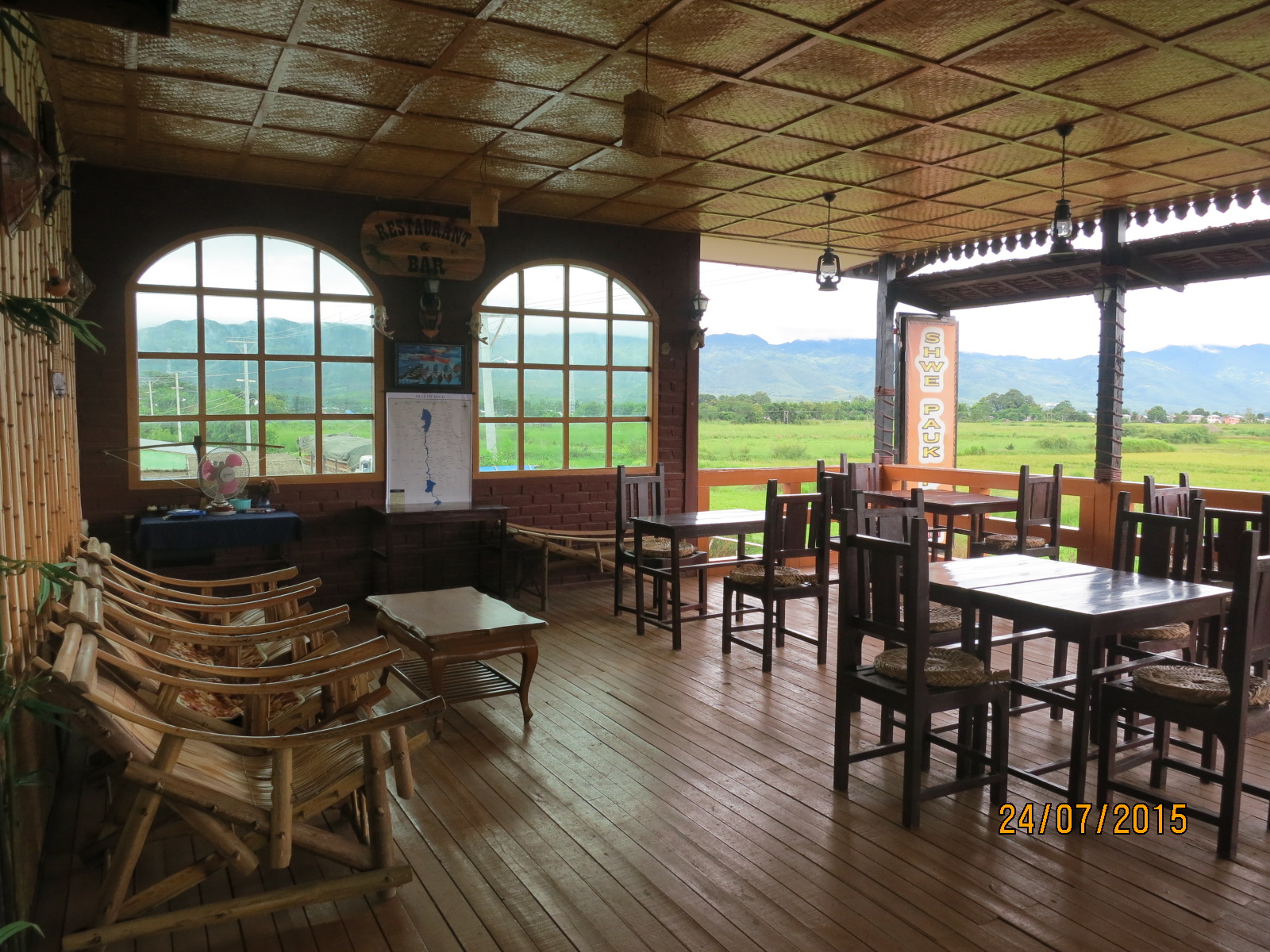
IMG_2177 IMG_2176 The sights, sounds and my strangely satisfied stomach combined with the fresh chilly air was the perfect day-ender to a lovely trip so far…

‘IN na IN’ at Shwe IN Dein  

The leg-paddling fishermen of Inle Lake

The next morning, Saturday, I was determined to maximise the day doing the famed Inle Lake tour. I hired a boatman for 17,000 kyat (roughly US$15) for a 6 to 8 hour tour of the lake’s standard attractions such as the leg-padding fishermen; the floating villages of Yawama, Nampan, along with a floating garden of tomatoes; the silversmith, paper umbrella and cigar-making shops; the silk weaving and lotus silk factory; pagodas and monasteries. I paid my boatman extra though to take me to the village of Inn Thein, famous for their collection of over a thousand ancient pagodas dating back to as early as the 14th century, at the height of Buddhism in the country. After a 20-minute boat ride up a narrow canal away from the main lake, we arrived at the village and after some cajoling, convinced my boatman who just wanted to stay with the boat, to come and walk with me up to the pagodas. I’m so glad I did that as I would never have learned some interesting facts nor found a way up to climb up the hill behind the main grounds that offered fantastic views of the entire valley.

Shwe Indein Pagodas from the 14th century, many with banyan trees already growing out of them.

By the time he and I finished our tour of the pagodas, the hill, and the massive temple with its long walkway of stalls selling souvenirs (most of which were closed, thankfully!), we were both starving. So much so that my boatman uncharacteristically expressed his hunger. I solicitously apologised and offered to buy lunch and he quickly took us to a local roadside cafe about 5 minutes walking from the tourist site. He was incredibly accommodating, fussing over me and rousing the resto staff to take my order and make sure I had enough of what I ordered on my plate. 20150725_135605

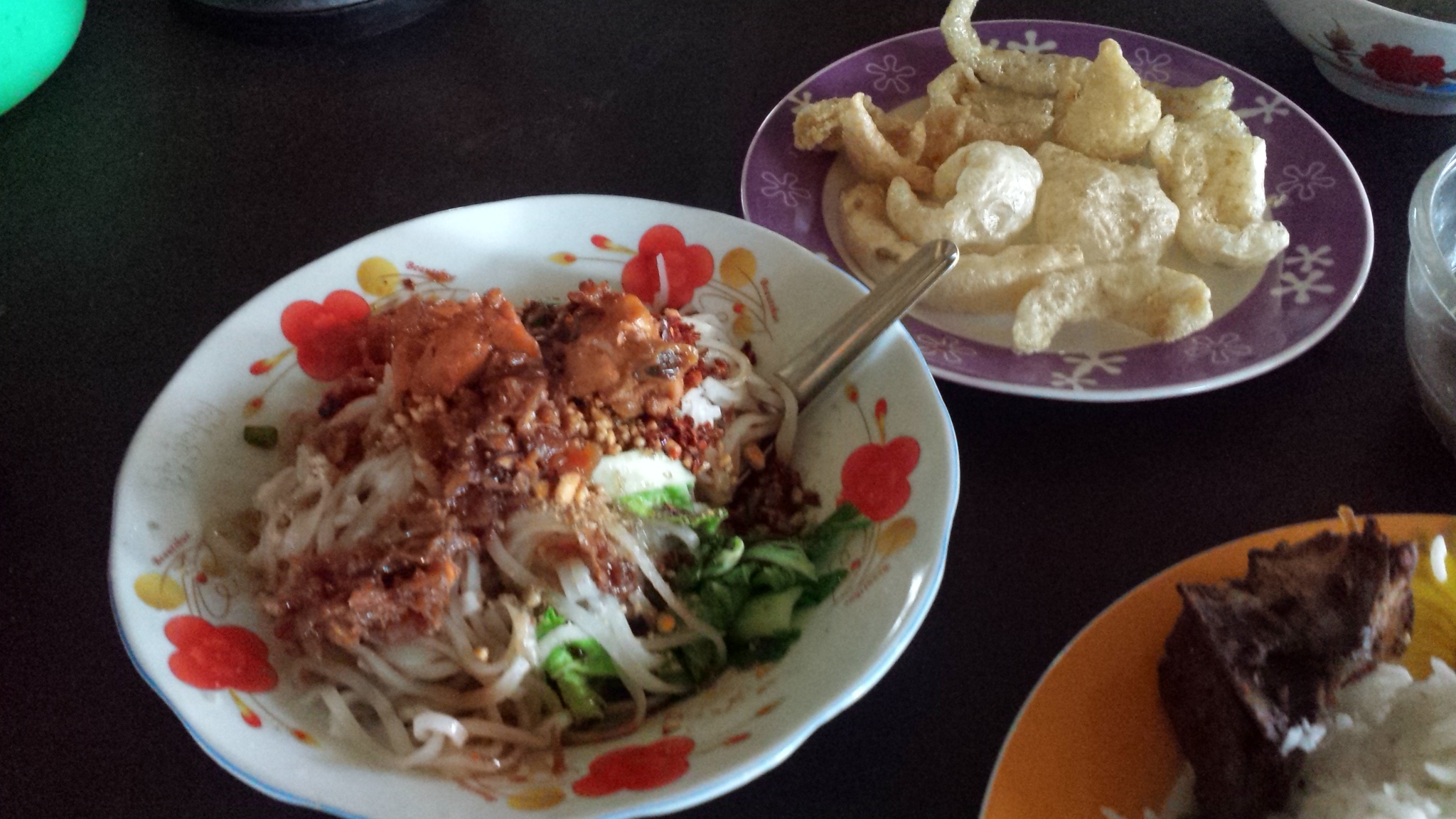
Shan noodles and chicaron!

It was another fantastic meal comprising of fried chicken, more Shan noodles and what was perhaps my most delightful discovery about Burmese cuisine: chicharon!

The Charm of Chicharon!

This was something I finally started taking notice after about 2-3 authentically local meals. Chicaron or deep-fried and dried pork rinds was a staple food in Myanmar (or at least in the Shan State) and frequently accompanied anything they ate: rice or noodles. Not really sure how this came to be but I was soooo excited and found myself stuffing my mouth full of noodles, together with spices, the by-now-standard pickled veggies, tofu salad, and chicharon, just to experience the pleasure that all these flavours brought together in my mouth. The craziest thing? Our meal for two which included side dishes and drinks (two Cokes and a bottle of mineral water for me and another Coke for my boatman) came to a total of less than 5,000 kyat (US$4)!

Dinner set at Mya Thazin restaurant. 11,000 kyat included salads, rice crackers (instead of chicharon I suppose...oh well), and mint soup.
Dinner set at Mya Thazin restaurant. 11,000 kyat included salads, rice crackers (instead of chicharon I suppose…oh well), and mint soup.

By comparison, dinner at Mya Thazin restaurant back at Nyaung Shwe village seemed tame (and super expensive!) by comparison. But I still enjoyed the pork curry set that came with its usual coterie of side dishes, plus mint soup that I requested in lieu of the bean soup that was actually part of the set. They also gave me a free fruit platter for dessert while I logged into their wifi to connect with my siblings back in Manila.

Serendipitous Sunday

Perhaps the highlight of my entire Myanmar trip was the excursion to the floating market that I had to take the next day because I had set out too late the day before to catch the action at one of the villages. I was told by my boatman that the so-called ‘floating market’ shifted locations every day and the day I had chosen to go on my Inle Lake tour, the market was going to be somewhere further down south and would take an extra two hours to get to. He said the next day’s market would happen at Ywama, a village we had already visited that morning, so I decided to just go for it and haggled for a specially discounted price as I was now only going to use the boat for less than 2 hours to go to this one place.

I was set to leave Nyaung Shwe that day as well which meant I had to get an extra early start to the day. I found this brutal after two nights of not sleeping well and I almost called to cancel the tour when the Universe decided to reward me with a special event I assume not many tourists see. IMG_2289 IMG_2290
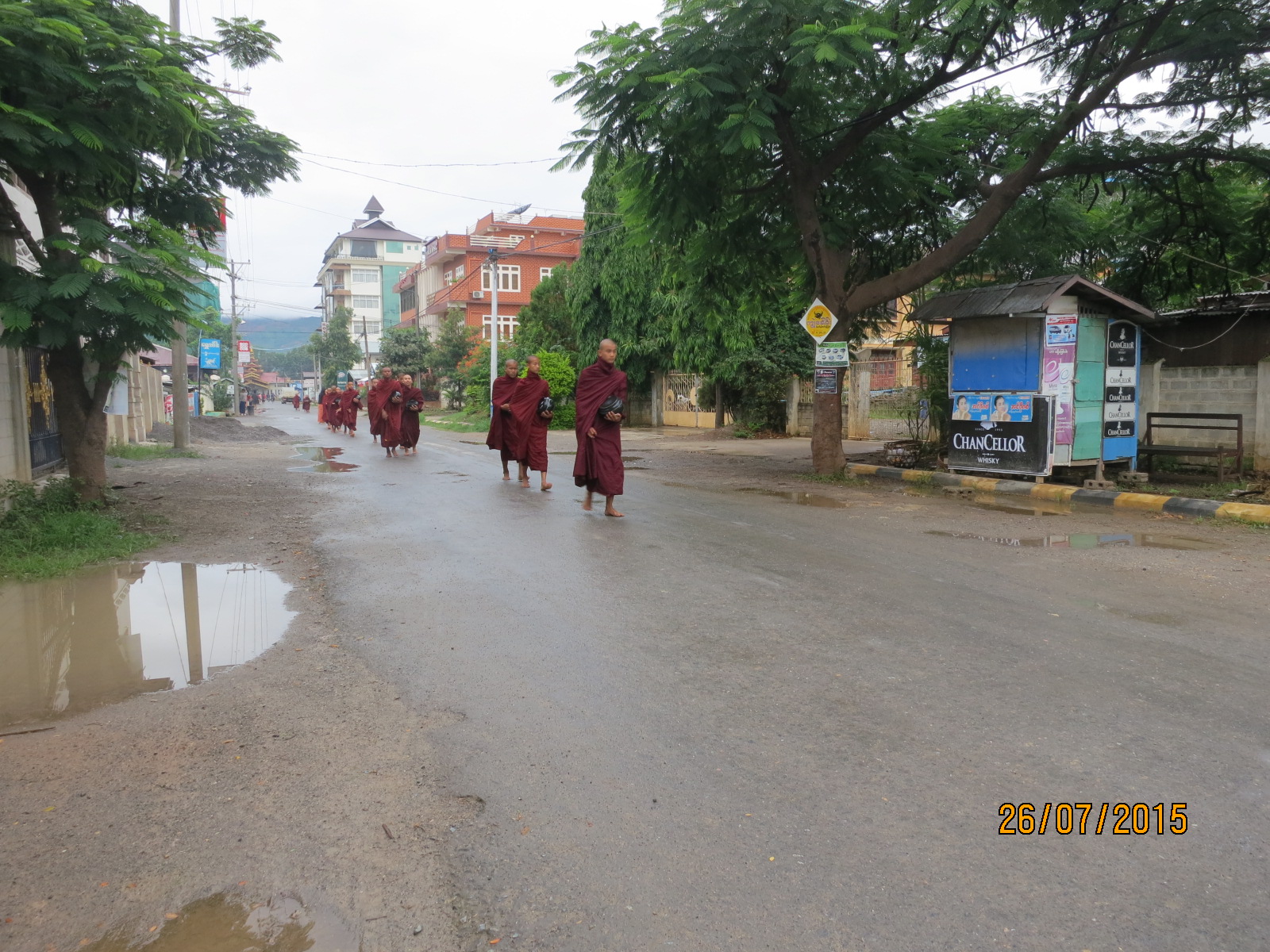
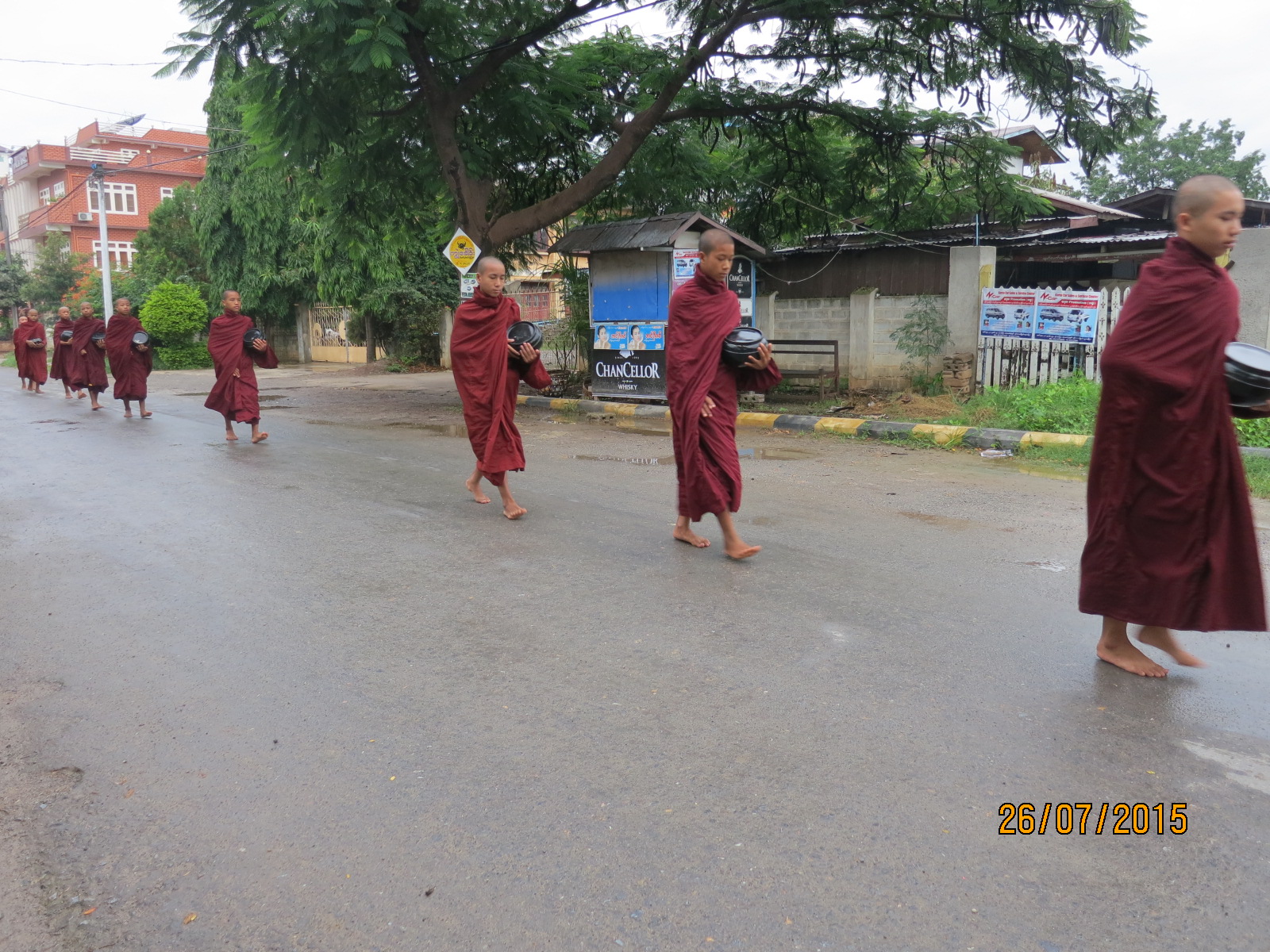
I was pedalling sleepily up the road with the intention of telling my boatman that I had changed my mind when I spotted a column of saffron robes striding purposefully down Strand Road, the main road that ran alongside the river banks. Every couple of street corners or so, locals would greet them carrying pots of hot, newly-cooked rice that they would scoop and dump into the bowls carried by the monks. Their ages ranged from children to senior age. I surmised that they were headed for one of the many pagodas that dotted the landscape of Nyaung Shwe for some kind of Sunday service.

I was so inspired by this sight that I took it as a sign to continue with my adventures as planned. I was further buoyed when I saw that my boatman was already at the docks, smiling and ready to go that we managed to set off 15 minutes earlier than our planned departure.

Typical Sunday morning market.

That Sunday’s Ywama market wasn’t exactly floating. Because the tide was still pretty low during that time of year, my boatman told me the market would be land-based. At first I was disappointed as I didn’t think the market was any different from one I would see in the Philippines. But after walking through the various stalls, seeing the different produce, and more importantly, watching the locals shopping, I couldn’t help but be taken in by all the colours of the scene. I had almost forgotten about our early-morning start until my boatman once again uncharacteristically stated he hadn’t taken his breakfast yet because of our super early appointment. I had to apologise again which he just waved off and proceeded to lead me to a food stall in the very centre of the market. Here, I had the most amazing meal of my entire stay in Myanmar.

A most ‘Intha-resting’ Breakfast…

My boatman introduced me to nge tha min nal (fish), wet tha sin (pork) and Shan rice (sticky, glutinous). The meal consisted of 2 layers of sticky glutinous rice rolled and flattened into a pancake in between which was a combination of dried pork, fish, fried garlic and seasoned with chili and oil (?) and served on banana leaves. It came with and was meant to be eaten with spring onions that my boatman kindly stripped and put on my banana leaf plate, as well as… you guess it! Chicharon! This was what probably had me floored the most: the ubiquity of chicharon in Shan cuisine. As with the previous day, I stuffed everything in my mouth all at once to experience all the flavours fully before washing it down with fresh green tea.

Nge tha min nal and wet tha sin with Shan rice. My best meal ever!

It was pure heaven! What made the experience more incredible was how I could just sit there and watch the market action swirl all around me. Looking the way I do, I was lucky I could blend in without getting stared at or disturbed by vendors selling souvenirs (although no tourists or hawkers were out this early). Only when my boatman spoke to me in English did the heads of the locals turn in puzzled astonishment would I get scrutinised more closely. It was just as well we couldn’t move as the combination of oil and what I guessed was MSG had my head swimming for a while, that I had to drink copious amounts of tea to get rid of the feeling.

The unexpected encounters didn’t end there. Once Nyunt Pe, my boatman, and I resumed walking around the market, I spotted a couple of Kayan women whilst they shopped. I ended up ‘politely’ stalking them around the market for a while, taking advantage of how oblivious they were to me, until I managed to get up the nerve to ask Nyunt Pe to ask them for a couple of pictures. It was a shame I could only say, “”chei-zu tin-bar-te” (“thank you”) but I also squeezed out a “tha tha!” (“goodbye!”) after much practicing with my boatman.

20150726_080423
Bumping into and eventually ‘stalking’ these Kayan women to get a photo op. 😛

Back at the docks in Nyaung Shwe, I thanked Nyunt Pe profusely for all the wonderfully authentic experiences of local culture and food I had because of him (as opposed to the commercialised attractions of Inle Lake) and gave him an appreciative US$2 tip.

Kindness and Aung San Su Kyi

I thought that would be the end of my food tripping in Inle. But I had a few hours to kill before I had to go to the airport to catch my flight. So I thought of cycling down to this cute little cottage I kept passing by everyday to see if I could lunch there.

When I arrived, the main dining area was full of Western tourists, kids and adults, busily preparing dishes. The staff quickly came out to greet me and apologetically informed me that they were closed for a cooking class that day and not serving any food. I guess my disappointment was so genuine and obvious that without my even asking, the staff member (who turned out to be the owner) invited me inside anyway and asked if it was alright if he served me whatever dish he could make with the ingredients they had left from the cooking class!

I was floored once again by the kindness and hospitality of the locals. His wife then came out and escorted me to the only other unoccupied hut in the garden and I sat back to take in my surroundings: a tiny garden cramped with all sorts of vegetable crops that formed their menu. A waitress served me the freshest, sweetest mango shake I’ve had in ages while I waited. Several minutes later, I was served a simple fare of fried rice with string beans, a portion of fish curry which I guessed was from the cooking class, and a small plate of yummy tofu salad. The fried rice itself was tasty if a bit too oily. But the staff were very attentive and when a fly fell and drowned in my super sweet mango shake, they immediately replaced it.

20150726_124635
Fried rice with veggies (super oily!), tofu salad, fish curry and fish sauce with chili.
Watched over the 'The Lady', Aung San Su Kyi
Watched over by the ‘The Lady’, Aung San Su Kyi

But the most impressive thing about this restaurant was when it was time to pay the bill. The owner (the husband it turned out) informed me to just pay for the mango shake (1500 kyat) and just donate what I felt was a fair amount for the meal! He then went on to hand me a brochure and tell me about their charity programme where they donate 15% of all their profits to an orphanage in Nyaung Shwe. He was building a library and accepting book donations as well as cash to fund this endeavour. I was so touched by their obvious kindness, generosity and charity that I paid an extra 6,000 kyat even though I’ve had more elaborate meals on this trip earlier.

It was an incredible day of culinary discoveries, all delicious, and all truly unforgettable!

Bagan 

That same afternoon, I took a rather dodgy domestic flight from Heho airport to Nyaung Oo airport to get to Bagan. The weather was even worse than in Nyaung Shwe, darker and heavier with intermittent rain. After checking in to my rather miserable-looking hotel, I quickly asked for a bicycle and the wifi password to research dinner places.
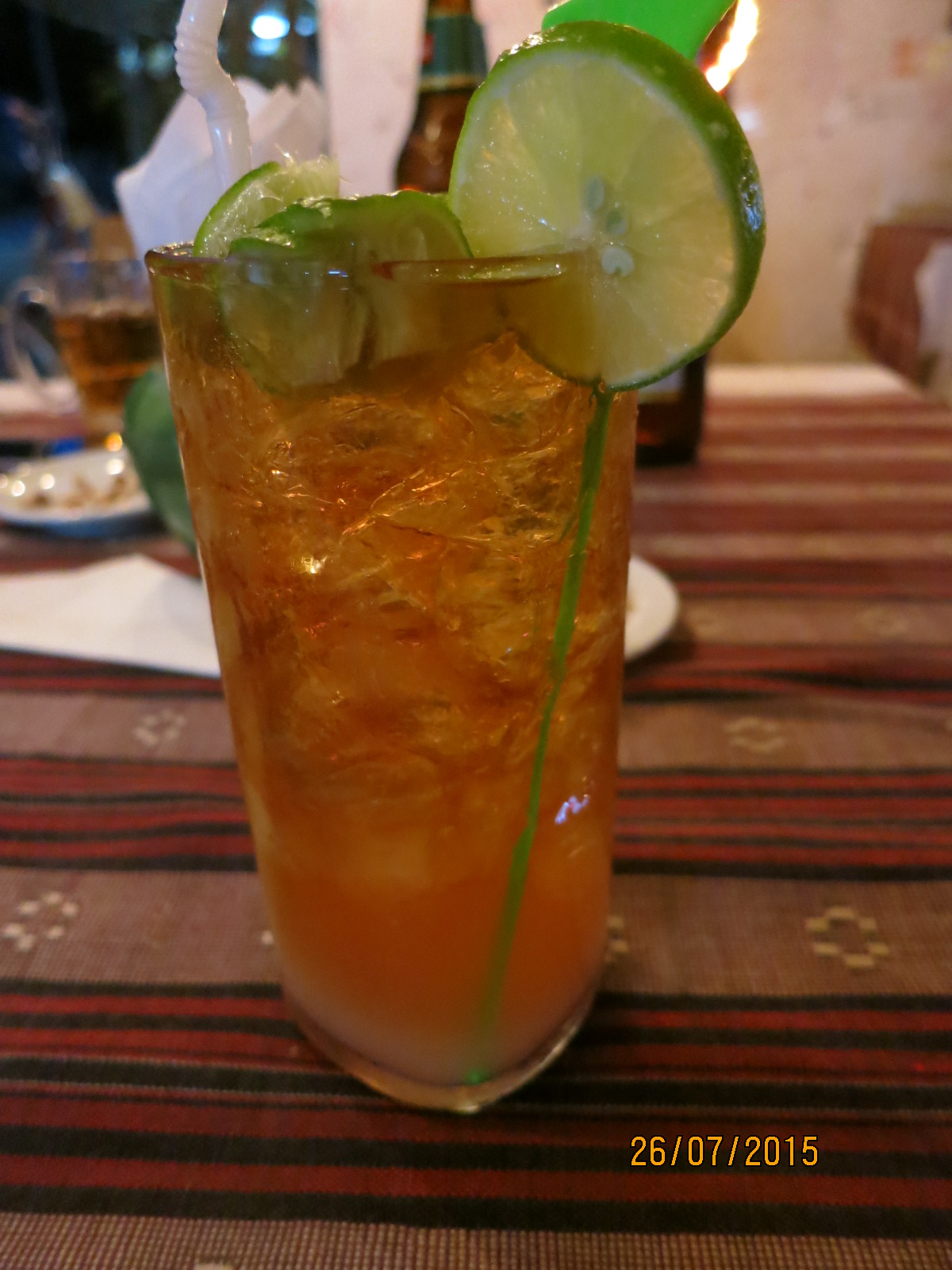
IMG_2337
A ‘Myanmar Mule’ – ginger, lime, honey and local rum… a little too salty and bitter for my taste. But it did do its job! 😉

Trip Advisor recommended Weatherspoon’s Cafe on Restaurant Row. So after a short ten-minute bike ride in the dark down Nyaung Oo’s streets, I pulled up at Weatherspoon’s where I ended up sharing a table with a guy who recommended the tea leaf salad. This was another tasty dish although it was more on the spicy side (like Thai-level of spiciness) so I wouldn’t have enjoyed it much save for the nice combination of nuts and fried garlic sprinkled on top. I managed to wash it down with Myanmar beer (that most beer drinkers would probably hate as it’s too watered down but it was perfect for me) as well as a local cocktail called Myanmar Mule which I didn’t particularly care for but still finished, cuz well, one must never waste alcohol…

Bagan Breakfast Buffet

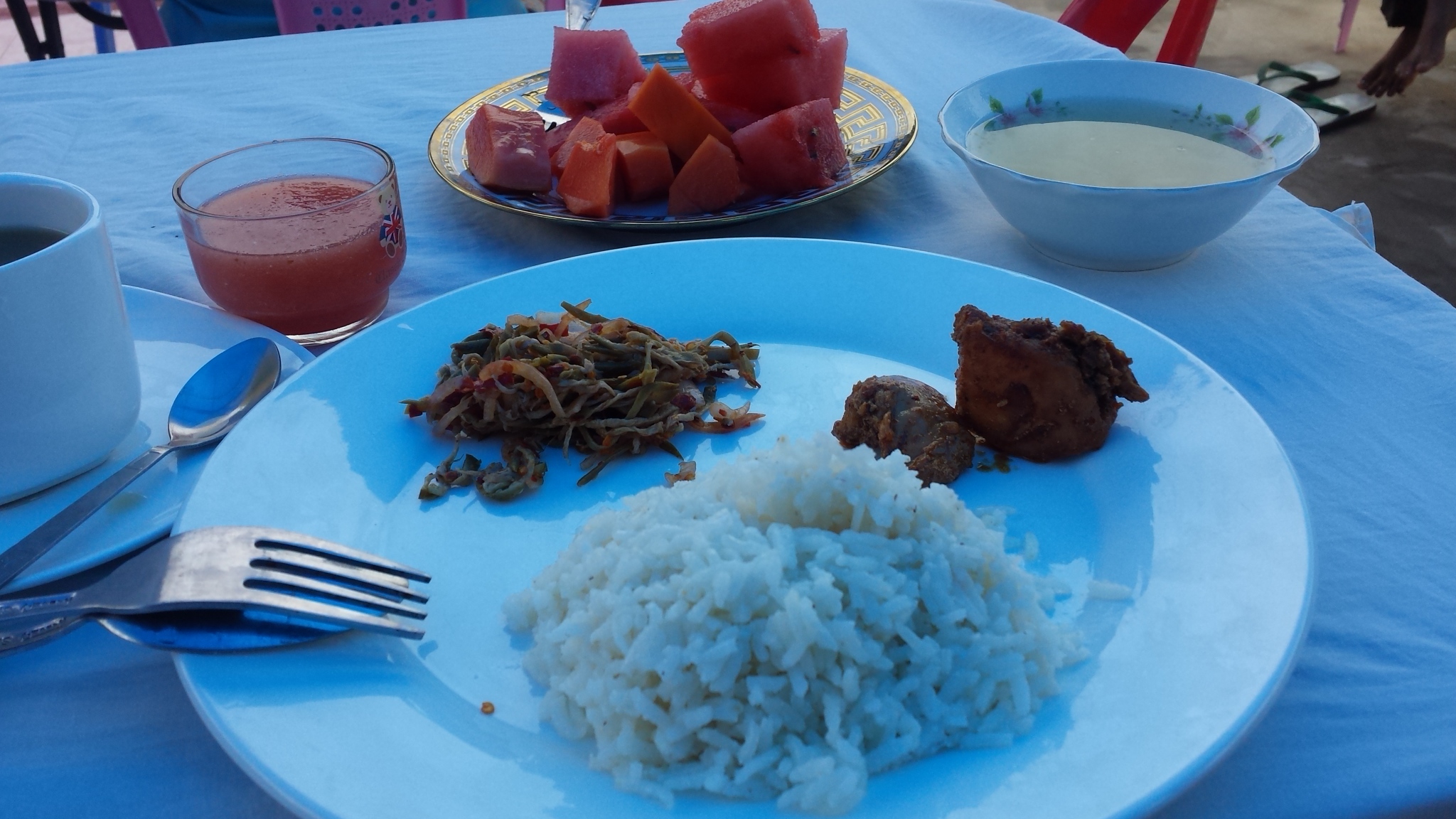
Finally, my Burmese food trip concluded with a couple of savoury breakfasts served by my hotel together with the room package. On both mornings I joined the guests at the rooftop restaurant where breakfast was served daily. Breakfast consisted of different fried rice dishes. One was a coconut fried rice set with deep fried garlic, a rather dry chicken curry (but still tasty!), lotus shoots and of course  — chicharon! Plus fried egg. The other was set was green tea leaf fried rice. The tea leaf fried rice was mind blowing enough but what really drove me over the edge of bliss was the discovery of dried shrimps –or alamang as it’s called in the Philippines– which served as a salty seasoning to the entire dish. I LOVED it. Again, I combined all ingredients in my mouth for a fuller experience. And when my plate emptied, the head waitress didn’t hesitate to take it and mix me a new batch of rice plus the seasoning of the day (coconut or tea leaf).

Tea leaf fried rice which was my breakfast on Day 2 in Bagan.
Tea leaf fried rice with a side of dried shrimps for seasoning on Day 1 in Bagan.
Coconut fried rice with some chicken curry, pickled veggies, soup for breakfast on Day 1 in Bagan.

I’ve never been on a trip where the biggest thing I’ve had to rave about is the food. My waistline has expanded by a few inches just in the week that I was sampling full on Burmese fare. I don’t mind. Once I’m back to the grind and stress of Singapore, losing my appetite on boring old hawker food should help me in shedding off a few pounds again. And even if I don’t, the pleasure of having savoured all those flavours and encountering the kindness, hospitality and accommodation of the Burmese people make the few extra pounds and the few extra hours at the gym totally worth it.

And if nothing else, there will always be my newly discovered love for… chicharon! 😉 It will no longer be just ‘beer-match’ food for me!
Image

Here’s one for your bucket list: a 10-day silent meditation retreat

When my friend, Shevaun, told me about a 10-day silent meditation retreat she was planning to go on, I was immediately excited and decided it was something I was going to do too.

I’ve been meditating since 2009 ever since I read The Master Key System by Charles Haanel. Though that book wasn’t specifically about meditation, it did include meditation exercises at the end of each chapter to sharpen visualisation skills to achieve goals. I thought I became quite adept at it too, especially during my year-long hiatus in Beijing, where I had lived the relatively stress-free life of a student. I would sit quietly every evening before going to bed and at my “peak” could sit still for 45 minutes at a time without moving. Back then, that already seemed like a long time.

Over the years after moving back to Singapore and plugging back into “The Matrix”, I could only manage sporadic attempts at daily meditation – 15 to 20 minutes in the morning before leaving for work. I got into Eckhart Tolle and signed up for a number of “free” meditation courses offered by Oprah’s website. Again, these were just short 15 to 20-minute bursts of silence as they gave you concepts to “ruminate” on every morning and evening.

So I suppose I felt fairly confident of my ability to sit through a 10-day retreat since I already “sort of” do it regularly and found that I enjoyed the silence and stillness of just trying to develop awareness all around. Reading about the grueling schedule on the Dhamma website – which stated daily meditations that started at 4AM and ended at 9:30PM – didn’t even intimidate me that I immediately started looking for dates that would suit my schedule. I had a couple of months off while I changed jobs and wanted to take the opportunity to go to a country I had never been to before. I contemplated on Burma, birthplace of the vipassana technique itself, but finally settled on Sri Lanka after the only positive reviews I’d heard from friends about how beautiful and easy it was to travel around that country.

Everyone who heard I was going on a “silent” retreat expressed skepticism in some form as I am not exactly someone who is known for not talking. That was definitely the bit that was going to intrigue me, and I suppose everyone else, the most.

Day 1

I arrived at the Dhamma Kuta Vipassana Meditation Centre high in the hills of Mahakanda

My cell 2014
My cell 2014

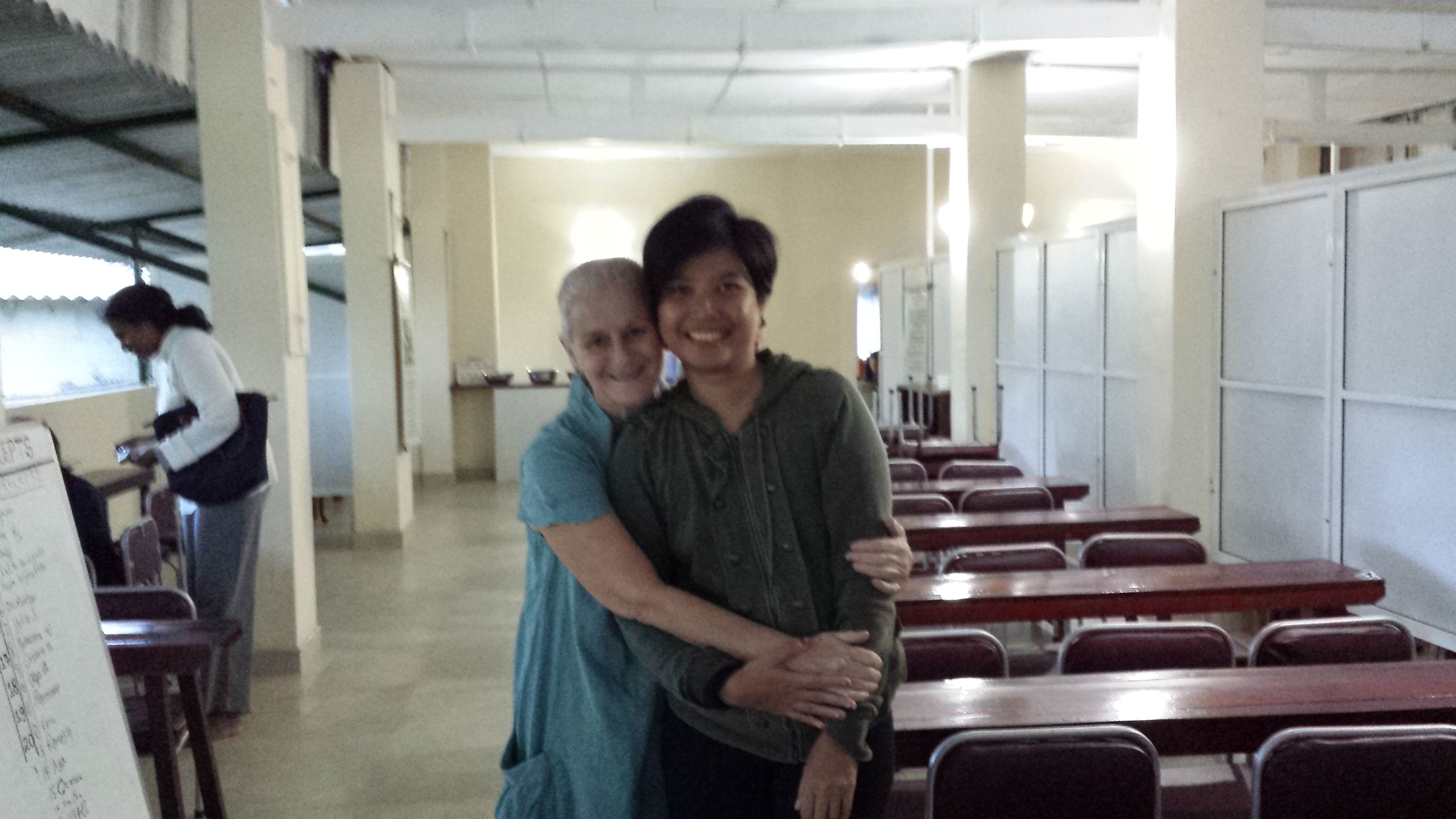
in the  Kandy district of Sri Lanka, about 15 minutes late for the prescribed registration time of 4:30 in the afternoon. I had been hiking in the Knuckles Mountain Range all day and was still in a tank top and shorts – which was a big no-no on the premises. Perhaps it was my flushed, sweaty face or my incredibly embarrassed demeanor, but the lady taking registrations (I later learned she was to be our head teacher, Asha) took one look at me and soothingly told me they would give me one of their “best” rooms: a single cottage with my own toilet and bath. I guess I must’ve looked like a basket case to her and thought the more comfortable accommodations would help me. Then she sent me to the opposite room where I was to deposit my valuables. Smartphone, camera, wallet, even my travel diary

were confiscated and placed into a cheesecloth sack

My cell and bed
My cell and bed

and placed inside the office safe. That was it, bye-bye outside world for a while. Luckily, they let me keep my Beyond the Breath book, written by an avid meditator which outlined the theory and technique of vipassana. That book became a lifesaver for me, especially during those times when I got frustrated with my progress. More on that later…

Another meditator, Dilrukshi, accompanied me to my room since she had the cottage next to mine, on the left side. I immediately showered and changed into more suitable clothing (loose jogging pants and a large T-shirt and sweater as it was evening and getting quite chilly) and trotted off to the orientation which was to be held in the dining hall. I wasn’t sure if we were still allowed to talk so I hesitated chatting with other people unless they chatted to me first.

Men and women had separate dining halls and the tables were all arranged classroom-style. That is, all facing forward, and with some facing the wall or windows. Clearly this had been set up to discourage socialising.

As it was after 5pm, we were given only tea, fruit juice, crackers and bananas. There would be no dinners from hereon.

Dining hall
Dining hall

The recording of SN Goenka (or Goenkaji) was played over the PA system while we had our tea break. He explained the house rules as well as expectations of us during the retreat. The CD was broken so the male head teacher had to come in and explain some things in person to us. Then we were asked to write our names on the white board in the dining hall to indicate if we were old students or new students, as old students were supposed to have a more rigorous regimen of meditation (and also not allowed any food during tea break).

At exactly 7pm that same evening, we had our first meditation session. I don’t remember much from that first evening, except that we were assigned our seats in the hall which would be our spot for the entire duration of the course. I thought I had gotten a good seat – right on the aisle in the centre of the hall and towards the back. I had never sat on a meditation cushion before and 15 minutes into it I was feeling restless without the back support. (At home, I meditated sitting up on my bed with my back resting on the headboard and my legs stretched out in front). So this felt quite uncomfortable.

The next day was the start of the official count. I set my alarm for 4 am but found myself already awake by 3:45. That was because I barely slept, waking and rolling over every two hours as I tried to get used to the thin cushion over the concrete slab that served as my bed. I quickly showered and bundled up in my jogging pants and sweater and trundled in the darkness towards the meditation hall.

The first few days were tough. I think I changed my posture and sitting position 3 to 5 times per session. And before each one started, I would dig for additional cushions from the store room of the meditation hall to support my knees, my back, my bum. I could hear the others in the meditation hall struggling with their discomfort as well from the rustling noises I heard as they shifted positions. Even those who brought their own special yoga blocks or portable back rests (was so jealous of them at first) didn’t seem to be having a better time. That first day was all about finding my most comfortable position, until mercifully, by the time the evening session rolled in, I suddenly found myself sinking into an Indian-style position: legs folded, elbows resting lightly on my thighs, hands folded but relaxed on my shins. I lasted 1.5 hours in this pose and so decided this would be how I would sit for the rest of the retreat.

Day 1 to 3 was all about breathing, or what’s called the anapana technique. First we were asked to concentrate on the triangle from the top of our nose to the top of our upper lip. We kept doing this and each time, Gonekaji’s recorded instructions would tell us when the triangle would get smaller and smaller, until by Day 3, we would just be observing our breathing from the point of view of that small indentation of skin on our upper lip, right beneath the nostril. The objective was to strengthen concentration by being aware of how the breath feels from this tiny portion of skinThat’s all. Nothing else.

Obviously, this was easier said than done. Despite having found my comfortable posture, there would still be moments when I felt the need to stretch out one leg or the other (which I did), or to stand up and leave the hall and do a “walking meditation” (an option many of the older meditators took) to stretch out my back and bum. And then there was the challenge of calming the mind itself. During those first 3 days, I don’t think I went for more than two to three minutes of actual silence and concentration without my mind spiraling into its usual constant monologue about various aspects of my life. Keeping at bay the constant barrage of past memories and future plans… monologues that wouldn’t keep and dialogues with others that would never happen… they occupied perhaps 85% of my meditation time during those first few days. When I recognised that I had been breathing with my brain “empty” for a few minutes I would feel proud and happy, but then the mere act of recognising this meant I had just broken my streak! So then I had to start all over again.

It was exhausting. A really strange thing given that we were just sitting and doing “nothing”, but I ate like I was training for a marathon all over again during the first 4 to 5 days. I gobbled up the brown rice, potatoes, curry and sambal… any of the yummy Singhala vegetarian cuisine that was served in the dining hall… But then on Day 4, Goenkaji’s recording told us that the recommended food intake for meditators was to leave 1/4 of the stomach empty to facilitate meditation. That explained why I found myself swaying like a bamboo during the longer sessions as sleep threatened to overtake me and my full stomach.

Vipassana and the vow of “Noble Silence”

I soon realised that the “noble silence” wasn’t an absolute rule. First of all, the teachers would call us in for one-to-one interviews every other day to check on our progress and answer any questions we might have. Secondly, we also had the staff to talk to should we encounter any problems during our stay – which I did, as I had accidentally locked myself out of my room on Day 3(?) and had to go to the management office to ask for a spare key. And finally, it seemed not many of the other meditators took the “noble silence” seriously (or at least were unaware of its importance). On Day 1, the girl who lived in the cottage next to me, asked me if I thought her “blouse” was too transparent for meditation. Then a few days later, a French girl asked for my help to get rid of a spider in her room which she said was as big as a saucer (it was not). Another time, Dilrukshi asked to borrow an adapter for her electric kettle as she liked to boil her own water everyday. It was also disappointing to see many of the Western students gathering in the more hidden parts of the compound to chat about how they were doing. It was bad enough that they were talking, but what made it worse was that they were guys and girls talking together. You see, all throughout the retreat we were forbidden from mingling at all with the opposite gender. Or with any of the other meditators, male or female. That’s why signs discouraging even making eye contact were all around. I was genuinely curious to see how I would fare under an “absolutely no talking” rule, something I had only done once before in my life (back in 2005 on the overnight train from Shanghai to Guilin in southern China… but that’s another blog entry all together!).

Which is why I worked hard to keep to myself in between sessions, quickly locking myself inside my cottage should Dilrukshi or the other girls near me happen to be outside their own rooms. But alas, if someone talked to you, you can’t just ignore them now, can you? For our entire lives, we have been programmed to be helpful and not be rude, so ignoring someone who talked to me just felt so wrong and I automatically found myself replying when someone spoke to me (though one might say that in itself is a challenge to my awareness and self-control, but oh well…).

On Day 4 we were finally introduced to vipassana: focusing our concentration on our entire body, starting with the top of the head, and scanning ourselves all the way to the tips of our toes and feeling all sensations that arose from our heightened attention. I absolutely loved it. Well, I both loved it and found it frustrating at the same time.

I loved it because it was a great opportunity to pay attention to myself in ways I’ve never really done before. How does my nose feel? How about the back of my ears? Or the back of my neck or head? How does my elbow feel? It was also cool because years before when I first started meditating, I had started feeling sensations on one side of skull, as well as on my stomach and bum. And I could never figure out what that meant – if it meant anything – at all. Back then I would feel tingling and burning sensations on one side or at the back of my head, and I had wondered if that was my brain growing new neural connections or rewiring itself for new cognitive abilities. But how would that explain the butterflies in my stomach or the tingling in my bum? It seemed vipassana might offer an answer.

So I did the work and did it methodically as Goenkaji instructed. Of course, this is where I also ran into frustration because I discovered I had a number of “blind spots” where I couldn’t feel anything at all. And they were places that are never part of my daily attention: the back of my elbows, my armpits, the inside of my arms, the underside of my thighs, etc… I was frustrated because we were instructed that we couldn’t move on to the next body part for at least a minute until a sensation came up in that region. Which meant I slowed down a lot and couldn’t do a full body scan of myself even during the 2 hour sessions. I confided these troubles to the other teacher, Dr Kalyane, and in true Zen Buddhism fashion, she advised me to just exercise patience and let things be. I also complained to her that my left knee and leg were giving me a lot of problems. And again she challenged me to use it as a tool to sharpen my ability to be “equanimous”, while my blind spots were ways to heighten my “awareness”, the two qualities the Buddha espoused to overcome suffering in an impermanent world. I resolved to try harder and after tea break, we entered our evening session of Day 4.

I  guess this was my second breakthrough during the retreat. As soon as we started the session, I felt my face, both cheeks specifically, burn and tingle. This was different from earlier sessions.  The burning feeling was really intense, so intense that it was hard for me to concentrate on other parts of my body. And it didn’t go away. It stayed strong and hot all throughout, even if I was already scanning my shins and ankles and feet. It didn’t go away that I really struggled to maintain “equanimity” when my concentration was being absorbed by my burning face. I wondered what sort of sankara I had amassed in that area and what it meant. I just let it happen and continued scanning my other body parts. Strangely enough, that burning sensation in my face never returned in the subsequent days.

From Day 5 to Day 7, my body started giving off all sorts of strong sensations. The most disturbing, or rather, fascinating feelings I got were located on my head, where I got mostly pleasant, tingling, “insect-crawling” sensations; my abdomen and lower stomach, where strong burning feelings overtook me every time; and my left leg, from which pain screamed at me from my knee, up the thigh and down to my ankle. What also added to my frustration was developing blind spots where I used to have feelings before, such as the back of my head and my neck. Again, Goenkaji’s counsel was simply to observe and remember that everything was impermanent: just as my pleasant feelings would drift away, so would my pain. Hence, on the evening of Day 6, I endured the searing pain in my left leg and simply watched it, while calmly repeating to myself, “Anichya… anichya…” which is the Hindi word for the concept of impermanence: everything arises and passes – and is at the core of vipassana and the Buddha’s teaching.

And then suddenly, the pain evaporated. Just as I had surrendered myself to sitting in pain for the next hour or so, it evaporated. I sat there in silence and “watched” my leg from within as it felt calm and still. And just like that, I had a very good meditation session where I remained alert and calm for more than an hour and was able to continue feeling my body with absolute objectivity.

That was on the evening of Day 6. And I felt buoyed by my progress. Until Day 7 when my struggles stopped being physical and became mental.

Day 7 and exhaustion

A day before I was to go into the retreat, the owner of the homestay I had been living in in Kandy, introduced me to a neighbour of theirs who had done vipassana many times before at the same Dhamma Kuta centre I was going to the next day. She was a lovely woman who was a lawyer by profession and she and her husband generously invited me to their home for tea. She got excited when she heard that a foreigner, and a non-Buddhist at that, had come all the way to Sri Lanka to learn vipassana. She generously shared what the retreat itself was going to be like and about her experiences with me. One of the stories she shared was how she had had an “out of body” experience during one of the sessions, which so frightened her, that she immediately stopped. It was this story that I found myself suddenly ruminating on during Day 7…

I had been having good sessions since magically “curing” the pain in my left leg. It also helped that I had asked to be moved to a new seat after my seatmate had hit me twice with a cushion during one her many position adjustments. In my new space, I found myself progressing nicely, having sessions of uninterrupted calm and intense concentration (and burping a lot!… A natural way to release sankara apparently…) that I was finally able to do full body scans (both up to down, and down to up) in one go.

My neighbours at the retreat centre

I also started feeling light-headed. And perhaps the many days of sitting for 10 hours a day was taking its toll on my body. It possibly also didn’t help that I had stopped feeling hungry. Beginning Day 6, I was barely consuming more than a few mouthfuls of food per dining session. In fact, I felt like I could go on without eating at all and that the only reason I ate was because we had nothing else to do during the dining hours. But I really felt like my stomach had shrunk to the size of a walnut. I had even started having leftovers on my plate despite the small portions I already took.

Perhaps it was all these factors combined that made my exhaustion more apparent. During the last afternoon session on Day 7, I suddenly remembered the astral projection story of my friend and found myself suddenly panicking that the same thing might happen to me. Not in the meditation hall, where it would’ve been fine since I was surrounded by people and can shout for help. But what if it happened at night when I was back in my cell alone? The fact that I was sworn to noble silence and couldn’t, shouldn’t scream or shout for help only compounded my anxiety. I literally found myself having a mini-anxiety attack during the afternoon session that I had to approach Dr Kalyane for advice.

Her words were as soothing as always: “Your mind can’t separate from your body if your mind is concentrated on the body.”

I felt like a lightbulb had gone off in my head. Of course! If I kept my mind on what I was supposed to do, that is, paying attention to each body part, my mind cannot go anywhere. Her words made sense. I went to tea break comforted at first, but also not entirely convinced. Perhaps I was still feeling afraid so while I worked hard and listened intently to that evening’s discourse, I found myself breaking my own vow of noble silence, and started chatting to Divya, my neighbour who lived in the next to my right. I thought that in the event I had nightmares or had the dreaded OOBE, I would at least have established some personal rapport with her and can ask for help. All sorts of scary thoughts and images started flooding my head, especially in the evenings. Our cottages were located at the edge of the forest away from the rest of the dorms. This hadn’t bothered me in my first week there, but suddenly on Day 7, our location started looking spooky to me. Every possible horror show character emerged from my imagination at every corner or tree illuminated by my powerful dive torch: zombies, ghosts and monsters from Philippine mythology… and I kept having disturbing images of feet hanging from the ceiling of my cell. I guess all the media I had absorbed my entire life was also being released by my mind. It was really starting to get tough. Even my early morning walks to the meditation hall in the darkness became scary and spooky. I used to enjoy taking the longer route to the meditation hall. Along the way I would turn off my torch and allowed the darkness to envelop me so that I could gaze up at the clear mountain sky where the Milky Way was always visible. So many stars! Alas, because of my paranoid thoughts, not only did I start waking up later and later, but I also woke up tired and found myself taking the shorter route because I was already late.

It wasn’t all bad, of course. The strides forward I had made on Day 6 allowed me to stop having all the silly inner monologues and dialogues in my head. I guess that’s why I suddenly had the mental room for all kinds of other rubbish in my head. Releasing sankara wasn’t just limited to the body it seemed.

Entering the homestretch

By Day 8, you could feel that people were starting to look forward to going home. One

With Odette, who heads the Red Cross in Sri Lanka

evening (not the only one during our stay though), we had a power blackout after some heavy rains and thunderstorm. The entire compound was in darkness, so during one of our short toilet breaks in between sessions, I helped light the pathway for some of the older ladies who didn’t have torches with them. An elderly French-Canadian woman gratefully walked next to me and chatted me up. She was delighted to hear that I was from the Philippines because she had spent many weeks rebuilding in Leyte after Typhoon Haiyan. I couldn’t stop myself and asked, “Are we allowed to talk yet?” It seems everyone’s resolve was starting to weaken after more than a week at meditation camp.

But this was also when started having these great synchronised  “lulls” or rather, “peaks” during the sessions when you could sense everyone was “in the zone” – both the men and women. The entire meditation hall would be silent.  No one stirred, not even this annoying guy across the hall who was constantly shifting in his wooden chair causing it to creak noisily. You just felt the calm energy of the entire room and I myself felt light… like I wasn’t even there in my body. It was such a joy to feel and exciting to “watch” (even though I didn’t have my eyes open).

By this time also, we’ve had a number of dropouts. Yes, apparently, people can leave if they have a compelling enough reason to do so. On Day 4, French girl who was spooked by the spider, didn’t show up anymore. By Day 6, the first of the Western girls left. She was the one I had seen chatting to her boyfriend in the driveway, away she thought, from the eyes of the teachers. On Day 7, her friend and her boyfriend followed. And on Day 8 (Day 8!!! Only 2 days to go!), the last of their friends disappeared as well. From a group of 22 women, we were down to around 15.  And the men were down to about a dozen from an original number of 16 or so.

On the evening of Day 9, the vow of noble silence was lifted and we were finally allowed to talk to our fellow meditators and to claim our valuables from the office. You could sense everyone’s relief, as well as the sense of accomplishment. It had been a tough 9 days and while we still had one full day to go, it would be relatively easier now that we could share our experiences and verbally encourage one another along. The very first thing Dilrukshi, the generous lady who had shown me my room, said to me as soon as she saw me was, “Thank you for being such an inspiration to me!” I was surprised until she explained that she had felt rebuffed by me on our first day of noble silence because of how I immediately retreated to my room when I saw her come out on her patio. She felt offended but then realised I had done both of us a favour by not encouraging small talk – which she said would’ve been inevitable given how sociable she was. She also said she learned from my example of “calmness” as she had been watching me walk slowly to class everyday at 4am and after lunch. Her sister turned out to be Asha, our head teacher who had facilitated my registration, and she had told Dilrukshi to watch and learn from me as I was clearly someone who was taking the course seriously. It felt good to have been recognised for my dedication… and funny how none of the agitation I felt inside ever showed on my face.

Dialogue with a holy man

That night, our last one in the compound, they brought in a Buddhist monk for our evening’s discourse instead of playing the usual video of SN Goenka. He was there to answer any concerns or questions we had about the meditation technique and the lifestyle practice of sila, samadhi and panya (morality, meditation and wisdom). But of course, things got philosophical as well. I couldn’t help but ask about the strictness of the very first precept, “Thou shall not kill”:

Me: “How absolute is the first precept? I mean, for someone like myself who grew up in the city, tolerating insects can be a challenge. Let’s say a scorpion is in your room. Are you allowed to harm it? What about a cobra?”

Monk: (through Asha who was translating for him): All life is sacred. You must absolutely never harm another creature. Besides, if you start radiating with the energy of loving-compassion, as what vipassana should achieve for you, no animal will ever be compelled to harm you.”

Yes, I too felt the same skepticism… clearly the Buddha never had to worry about dengue-infected mosquitos and bubonic plague carrying rodents before…

The amazing view on top with Adam's Peak in the distance
The amazing view on top with Adam’s Peak in the distance

On Day 10, I must confess my meditation sessions weren’t going as smoothly anymore. Perhaps because of the added “distraction” of socialising with my classmates, I found my mind drifting away again. One of the biggest concerns I had was how to incorporate my meditation practice into my daily life once I was back in Singapore and working full time again. Goenkaji recommends one hour of meditation in the morning and one hour in the evening. Where on earth was I going to find the time for that once I was back in the land of Facebook, YouTube and HBO? I was barely concentrating anymore that doing mehta, or ‘loving kindness’ meditation at the conclusion of each session proved challenging. I felt guilty about being unable to send out my blessings of love and kindness to the world…

On the morning of Day 11, we all gathered at the stupa at the top of the meditation grounds. I went barefooted and didn’t know we were going to be walking on raw earth that

Emerging  'clear-eyed' after 10 days of isolation
Emerging ‘clear-eyed’ after 10 days of isolation

I had a dandy time getting up there. But the view was amazing and we each participated in a simple ceremony of placing flowers on the stupa as an offering to the Buddha. The Buddhists in the group (mostly Singhalese) also did some ritual at the bodhi tree a few metres away. The rest of us – some Muslims from Kuwait, Russians, Indians and yours truly, spent the time taking in the view and congratulating ourselves on completing the course.

After this ceremony, the course was declared officially over. There was a mad rush as we cleared up the meditation hall, sorting out the cushions, rolling up the mats and sweeping the floor (for some reason, the folks who had volunteered to clean up every morning never did). We gathered in the dining hall for our last breakfast together and the noise was just immense as people exchanged contact information and talked about forwarding travel plans. I had lots of invitations for a place to stay should I ever visit Galle or Colombo (which I definitely took up later!).

Overall, I was quite pleased and happy with myself for accomplishing what to many (myself included) seemed like a truly daunting endeavour.

So what are my tips for those who are keen to try out this alternative kind of “holiday”?

1. Take it in morsels.

Just concentrate on the session you are in at the moment. Because if you start counting the days down,  you will have a hard time. I really forced myself not to think ahead to how many days we had left and just kept my mind on the upcoming session. If you have to, think about it in small bits. “Ok, just get through the next 20 minutes…” Then 30 minutes… then the next one hour. Before you know it, you will find yourself sitting still for two hours without you even realising it… and find yourself already on Day 6. You’re over the hump and entering the home stretch!

2. Buy the book, Beyond the Breath by Michael Glickman

As I mentioned earlier, I was lucky the staff didn’t take away my copy. In the evening or during the breaks, I would go back over the chapters where he described the techniques and mentions his tips for how to overcome obstacles and frustration. They became a lifeline for me as he was able to reinforce Goenkaji’s instructions in a more down-to-earth manner. And as someone who has taken the course many times, the author is able to anticipate the concerns of the reader. I found many questions I had wondered about were answered by his book. I had read him weeks earlier, but now that I was in the thick of the retreat, his descriptions took on deeper meaning and relevance.

3. Develop a tolerance for all creatures. And I mean, all.  

Perhaps my biggest challenge, if I am being really honest, was not the silence, not the food, not the sitting, not even the scary thoughts I had had. But it was the insects that I found living with me in my cell. (To learn more about why this was a problem, click here)

Aside from ants (which was more or less tolerable even if I imagined them crawling up my shorts in the evening), I found tiny worms in my shower. You know, the kind you sometimes see in your bathroom because of the mold and moisture? One day,

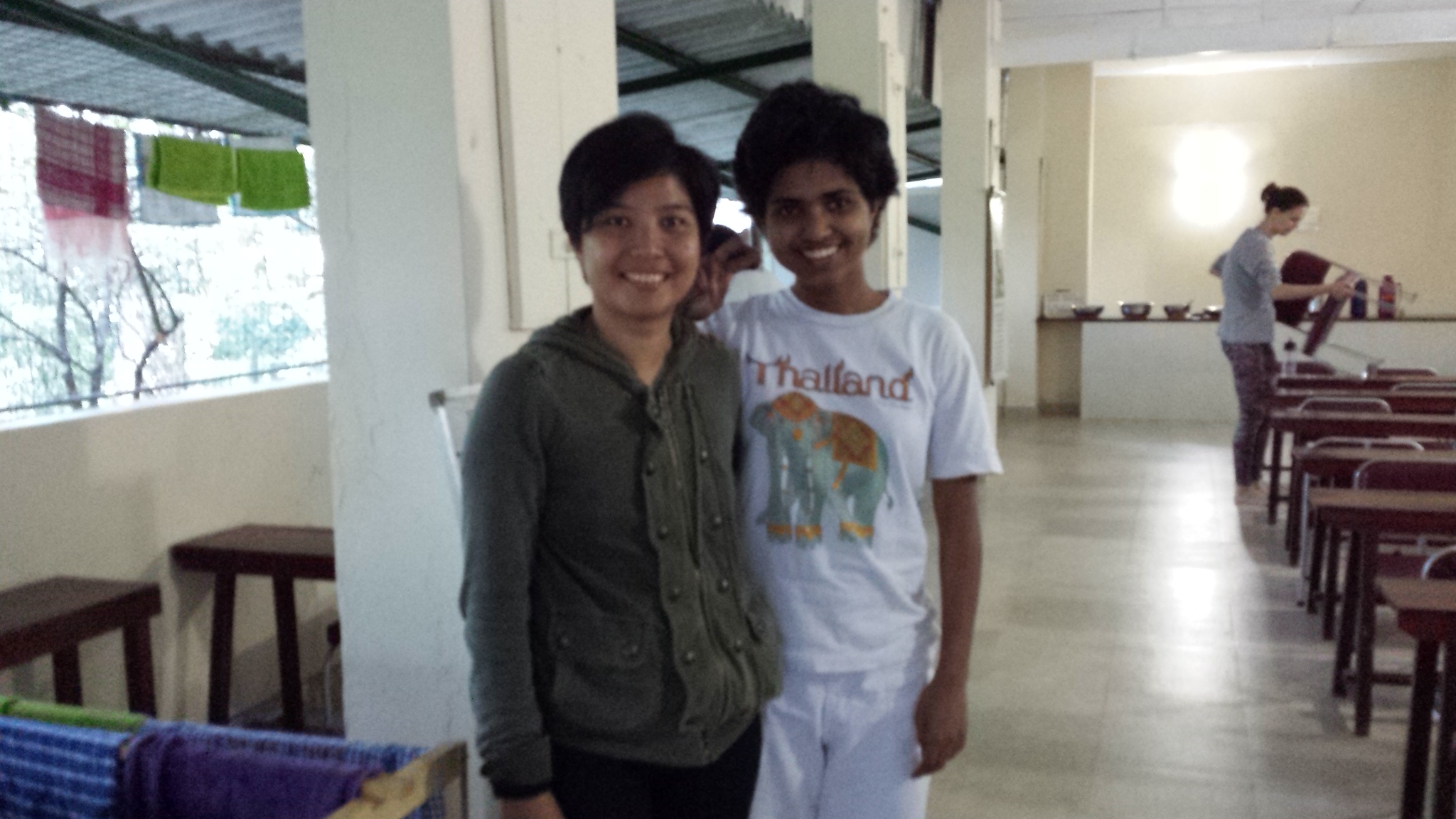
With meditation classmates, Divya from India and Aya from Japan

I even found a tiny worm (a small caterpillar I think) under my pillow beneath the folds of my bedsheet. And during one meditation session, a beetle landed on my left shoulder and decided to nestle in my hair (!!!) which gave me strong goosebumps all throughout. So even if that gave me so many sensations to work on, I had to give it a “compassionate” flick away and watched it bop towards another meditator before I felt I was safe. And despite the monk’s strict instructions about no killing, I drew the line with the cockroach I saw clinging to my mosquito net when I woke up on the morning of the 10th day. Obviously, I had gotten into the habit of giving my beddings a thorough shakedown every morning and evening and ended up whacking the little bugger as it attempted to scarper into the shadows. As we had another evening left, I couldn’t bear the thought of it still around and nestling in my sheets. (Sorry, Buddha, and to my Buddhist friends, but I really cannot tolerate the disgusting little creature. And sorry to whoever’s reincarnated soul it may be. For all I know, it could very well be Pol Pot’s or Hitler’s or someone who equally deserves it, so I’m not going to feel too bad about it…)

The courage to face yourself

There are so many other things I left out in this already lengthy sharing, but I suppose those will just come out as we chat about this in the future.

I really recommend this meditation retreat to everyone. It’s a different kind of holiday, as

I thought I'd get all my neighbours in one picture together :)
I thought I’d get all my neighbours in one picture together 🙂

it’s a break from everything that we are immersed in on a daily, if not minute by minute basis. I really believe this should be on everyone’s bucket list. Fine. List down hiking the Great Wall of China, or travelling to Paris, running a marathon or going skydiving. But how often will you have the opportunity to just really be with yourself? So many people train for endurance sports like ultra-marathons and Ironmans, or going on Bear Grylls’- kinds of holidays, like camping in the desert or living in the jungle with just a pen knife and believe that’s the ultimate test of endurance. But that’s all still just a distraction as far as the Buddha is concerned. Doing a vipassana retreat requires another kind of endurance, a different kind of stamina, as you attempt to learn intense concentration on yourself – not on a physical challenge such as 42 kilometres on a run or building a treehouse. But just experiencing yourself without the outside stimulus and distraction of daily life.

In a life where everything is impermanent, wouldn’t it be worth it to truly experience your body as it is before you lose it to aging and death? What you may learn from your body may surprise you and even benefit  you in ways untold. If you can muster up the courage to listen to it.

Now that’s a bucket list item that should challenge everyone. And it’s cheaper too!

For more information about vipassana and a schedule of 10-day courses around the world, visit www.dhamma.org.

To see a video of the Dhamma Centre I went to, click here.

Awesome view on the morning of the 10th Day

Quote

Old Maid in a New Age

Old maid?

I don’t know about you, but that term can carry such baggage for a woman. Especially one who’s at my age and inching closer to so-called “spinsterhood”.

Or should I go for the more hip term, “bachelorette”?

Whether women acknowledge it or not, our fear of being branded as an “old maid” comes from a deeply-seated fear in our collective psyches rooted in the universal tradition that a woman’s role in society and therefore, her worth, is strongly tied to her ability or qualities she possesses that would enable her to “be chosen” (by a man) for marriage, to bear his children, and raise a family.

So when a woman reaches a “certain age” and finds herself still single, most, including the woman in question herself, whether they dare speak it out loud or not, can’t help but wonder if there isn’t something “wrong” or “missing” with said woman. Is she a “loser”? A sad freak of nature?

That’s certainly been the case with me, although such pondering about self-worth isn’t limited to so-called candidates for spinsterhood. If I remember correctly, I first asked those kinds of questions at 16, which is when many friends in my immediate circle began dating, and I didn’t. And again at 23 when they started getting into more serious relationships. And I didn’t. And at 30, when they finally started getting married and settling down. And I didn’t.

So no, it’s not fully accurate to say life stage is the only culprit. I think the term has a negative connotation because of the images it can conjure.

When I trace my own childhood memories of “old maids” in my life, I recall one teacher and one aunt.

The teacher (I’ll call her Miss. V) was easily the best English teacher in the whole school and was the same age, if not close, with my mom. They also happened to be good friends. And while Miss V had a flourishing teaching career, she always had this rather cynical look about her, which my young mind could only interpret as sadness. Of course, I had no idea if that sadness was caused by her being a singleton or if it was something else all together. In any case, she didn’t strike me as particularly fulfilled, much less happy. (Disclaimer: Admittedly, I have no information whatsoever about her personal life then…or even now, which would make this an unfair assessment) But I do remember at home, when my mom would speak of her, the fact that she was still called “Miss V” carried a note of pity from her.

The other lady, my aunt, well… let’s just say she’s not what you would call a spectacular success. She never had much of a career to speak of – flitting from one odd job to the next, as salesgirl, or hairdresser – nor any romantic relationships that we were aware of. I do remember she was very active in church events and activities, largely because she was the youngest daughter and therefore, the default companion to my very religious, aging grandmother. But otherwise, I saw her as someone who was “waiting around” to be rescued, trapped by the circumstances, and unable to defy customs and traditions, or family demands and expectations.

And that’s really why “old maid” to me (and to most of us, I suppose) has taken on even more negativity than merely not being able to find a husband. It meant a woman who was “disempowered”, who “had no life”, was “uninteresting” and therefore had no notable achievements to speak of that may at least justify why she has remained single.

(Of course an argument could be made that some women get too caught up in their extremely eventful lives that’s why men would be challenged to get them to settle down… but that’s another blog entry all together)

For Miss V, as far as I knew, her life was all about the school – an all-girls traditional Catholic school where she would have little, if not no hope of ever meeting an eligible man. And my aunt, excepting for now her typically post-Spanish era, dysfunctional Catholic upbringing which I am certain contributed greatly to her state of spinsterhood, had never managed to come out of her shell and chose instead to live out her life within the confined walls of my relatives’ demands and expectations.

Fortunately for me, the world has changed quite a bit since then.

For in this age when education is more widespread and developing countries are experiencing increased economic prosperity; when we have women drivers, presidents and prime ministers; in this age of the Internet and budget airlines, smartphones and Facebook; when the dissolution (or at least re-examination) of many of society’s norms and standards is becoming more and more commonplace; in this age of Oprah, Jennifer Aniston, gay marriage and yes, even “Desperate Housewives”, being an “old maid” no longer implies “sad, lonely, disempowered and uninteresting wallflower”.

Because today, our 30-, 40- or 50-something so-called “old maids” are well-educated, well-traveled and well-funded. We are doctors, lawyers, founders of charities and social enterprises that serve the disadvantaged of the world. We hold MBAs and PhDs from Harvard and LSE. We served in the army as peacekeeping forces in Africa, or as global executives for multi-national ad agencies that have built the world’s most iconic brands. We travel to Maldives and Micronesia, to Angkor Wat, the Taj Mahal or to Machu Pichu on our own for holidays that used to be reserved for honeymooning couples. We scuba dive with manta rays and whalesharks, play sports and represent our countries in international tournaments. We start samba schools in places where people don’t even speak Portuguese, or join AusAid to build schools in rural Java. We can afford to take sabbaticals and move to China to study Mandarin, or quit high-paying banking jobs to learn baking at Le Cordon Bleu in Paris. And we’re able to do all this without the safety net of a husband’s financial support, or needing to secure his permission. There’s no need to consider how it affects our children’s lives or worry much about the practical consequences for suddenly making a right-turn,  U-turn, or detour on the road of life.

(BTW, all the aforementioned examples are accomplishments done by real women and I personally know of because some were my friends, and some were me)

Which is not to say that’s worth giving up on ever finding Mr. Right. I’m still hard-pressed to find a woman, no matter how independent or accomplished she is, who would turn down the chance to share her life with a partner. Or that we would ever be successful in fully exorcising the demons of our ego that demand we need to be married to feel complete and secure (unless you’re a Buddhist monk).

No. At the end of the day, we are still human. And we still live on Planet Earth.

I guess all I’m saying is, if “Mr. Right” doesn’t come at the so-called “right time” as per our personal timetable, or even if he doesn’t come at all, we needn’t be scared of being seen, thought of, or labeled as an “old maid” (even if that labeling just comes from our own insecure ego on the warpath to beating us down).  Because “old maid” can mean something better now.

It means independence – in every sense of the word.

It means freedom – in how we choose to spend our time, money or resources.

It means simplicity – in building routines and considering opinions, since those that ultimately matter are only our own.

It means possibilities – because the future is still an open doorway, leading to an open road. And we still have full say over how we want to travel on it. And with whom.

And because of the above, old maids are able to live extremely productive lives and have more varied experiences and true-to-life adventures. We explore a whole other dimension of what it means to truly live life to the fullest, and in the process, get to know a more “complete” version of ourselves.

So, in light of my married younger sister giving birth to my first nephew two weeks ago – I’ve decided that this milestone event officially brands me as an “old maid” (after all, she did bypass her older, supposedly wiser “ate”).

And in light of my approaching 38th birthday, I’ve decided that instead of being terrified of that label and therefore, forcing myself to take steps to end said state by going on an active dating spree (which is what most self-help books would recommend but one which I’m strangely not motivated to follow at the moment), I’d rather make peace with it.

Because despite all the freedoms accorded to footloose and fancy-free singletons like me, ironically, I have no choice. Except acknowledge where I currently find myself on this journey we call Life… and be okay with it.

Old Maid in a New Age

Milestones

The bustling South Street of Pingyao with its perfectly preserved old-style Chinese architecture

Today, I have been in China for 11 months and 20 days. While the last month of school was a struggle, the last 2 months of working have been – as usual – intense and interesting.

But rather than talk about the challenges my current job poses, I’d rather report about the progress I’ve made over the last few months with my Mandarin skills. Continue reading “Milestones”

Milestones

Mandarin Miracles

To the mostly-Western, no-Chinese-background language learner, Mandarin looks daunting. Seeing the two lines of Chinese subtitles on your pirated copy of “Avatar” is enough to turn any Roman alphabet-reading student off. Couple that with the fact that the same word said in different tones means a completely different thing, and I can’t blame you if you think that it would take a miracle for you to be able to speak, much less read Mandarin.

But when you start out with the right frame of mind, are willing to put in the work and have the ability to laugh at yourself every now and then, miracles can happen. Continue reading “Mandarin Miracles”

Mandarin Miracles